
Acne scars are depressions left where collagen was lost. RF microneedling rebuilds that collagen from beneath the surface, smoothing rolling and boxcar scars — without injectables, and without erasing the rest of your face.
£295
per session · full face
Enquire
course of 3 · discounted
2–12 wks
results build over
New client · free · no obligation
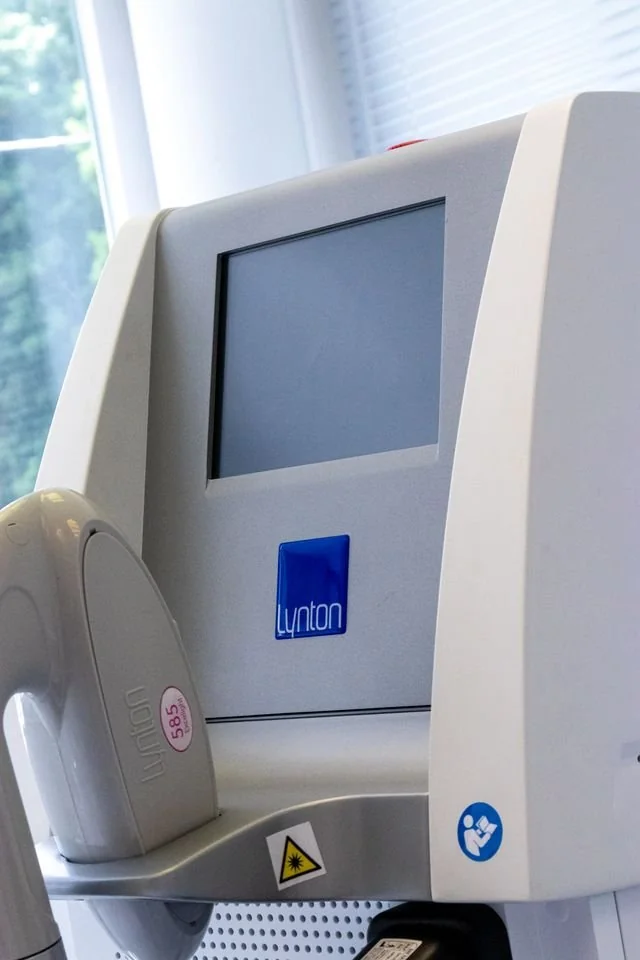
RF microneedling pairs fine sterile needles with radiofrequency energy to reach the layer where scarring actually lives. Anne uses the Focus Dual by Lynton — the same medical-grade RF microneedling technology trusted by NHS clinics across the UK. The needles create tiny controlled channels while the radiofrequency heat rebuilds collagen deep beneath each scar, lifting the base of the depression rather than merely smoothing the surface.
That depth is the key difference. Acne scarring sits below the top layer of skin, which is why exfoliating, peels or laser resurfacing alone give limited results — they work on the surface. RF microneedling works where the scar actually is.
Very narrow, deep ice-pick scars respond less well — Anne will be honest about which of your scars will improve and which won’t, before you commit to anything.
A session takes around 45–75 minutes including numbing cream, applied 15 minutes before so the treatment is comfortable. The handpiece moves across the skin in a systematic pattern — each pulse feels like a brief, warm prickling, not pain. Most people chat through it.
Afterwards the skin is pink and warm, a little like mild sunburn, settling within 2–3 hours. Medical-grade tinted SPF30 goes on after 8 hours, make-up the next day, and active ingredients (retinoids, AHAs, vitamin C) are avoided for five days. SPF30+ daily is non-negotiable afterwards — your skin is more photosensitive.
For most scarring, a course of three sessions, four to six weeks apart, is the right answer. Collagen change needs repeated stimulation to be meaningful — one session alone rarely delivers the difference people are looking for. Deeper scarring sometimes benefits from a fourth session. Anne will set out a realistic plan at consultation.
RF microneedling sessions for acne scarring start from £295. A course of three sessions, which gives the strongest collagen response, is typically recommended — Anne will confirm the right number for your skin at consultation.
Microneedling for acne scars has one of the better evidence bases among scar treatments. A systematic review of microneedling trials concluded it delivered meaningful improvement in atrophic (pitted) acne scars both alone and combined with radiofrequency or topical treatments, with comparable results to laser and peels but shorter downtime and fewer side effects — notably a lower risk of post-inflammatory pigmentation in darker skin types. Histology studies show real collagen increases, not just perceived improvement. What the research is honest about: scars are softened, not erased — improvements build over multiple sessions and months of collagen remodelling, and deep scars may need combination approaches.
Yes — it’s the treatment with the strongest evidence for rolling and boxcar scars. Because the scarring sits below the surface, the radiofrequency energy rebuilds collagen in the deeper layers rather than just resurfacing the top. Significant improvement is realistic; total erasure is not.
A course of three sessions, four to six weeks apart, is typical. Deeper scarring sometimes benefits from a fourth. Collagen change needs repeated stimulation to be meaningful.
Numbing cream is applied 15 minutes before treatment, so most people find it very tolerable — a sensation of warmth and light pressure rather than pain.
Skin often looks fresher within a week or two, with the deeper collagen improvement building over two to three months.
RF microneedling for scarring works on active scars that have finished healing — not on skin with active cystic acne, which needs medical management first. Deeper scars improve significantly but rarely vanish entirely; we'll show you honest expectations at consultation. If your scarring needs a dermatologist rather than an aesthetician, we'll say so.
Read the acne scarring advice guide for scar types, what actually works and honest pricing.
The full price list is on our prices page. Want the full picture on the treatment? Read the RF Microneedling treatment page, the Focus Dual deep-dive, or the device comparison (Focus Dual vs Morpheus8 vs 3D DermaForce). See how scarring fits into the wider picture on the acne scarring & skin texture page, and browse real client results.
A consultation is the honest way to find out — and it’s free. Anne will look at your skin, tell you which scars will respond and which won’t, and give you a realistic plan.
Book a free consultation